
A Daily Ritual at the Heart of Balinese Culture
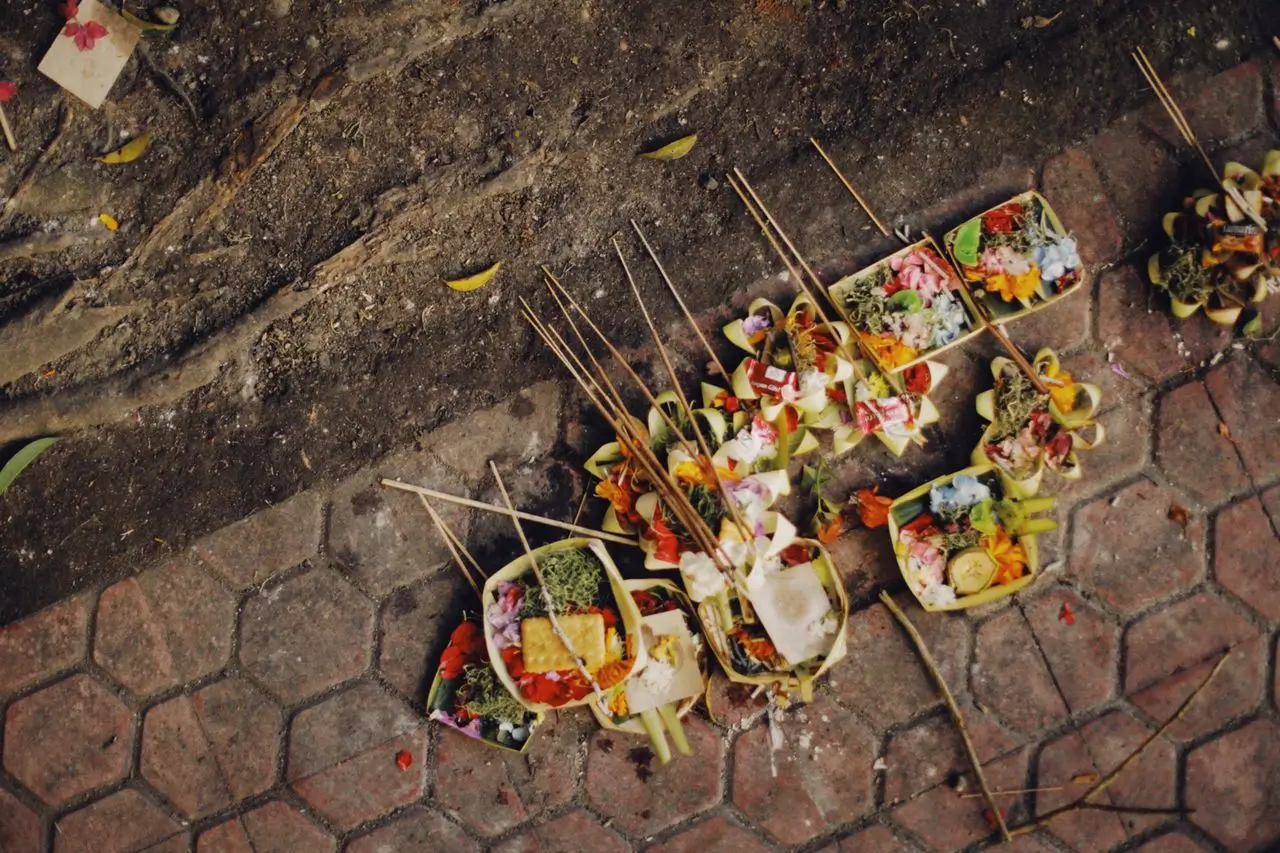
For many families visiting or living in Bali, one of the first things they notice is the small offerings placed outside homes, shops, restaurants, and temples. They appear on sidewalks, doorways, shrines, and even in places that might seem unexpected.
Children often spot them first.
“What are those flowers for?”
“Who put them there?”
“Why are they everywhere?”
These simple questions open the door to learning about one of Bali’s most visible and meaningful cultural traditions.
What Are Balinese Offerings?
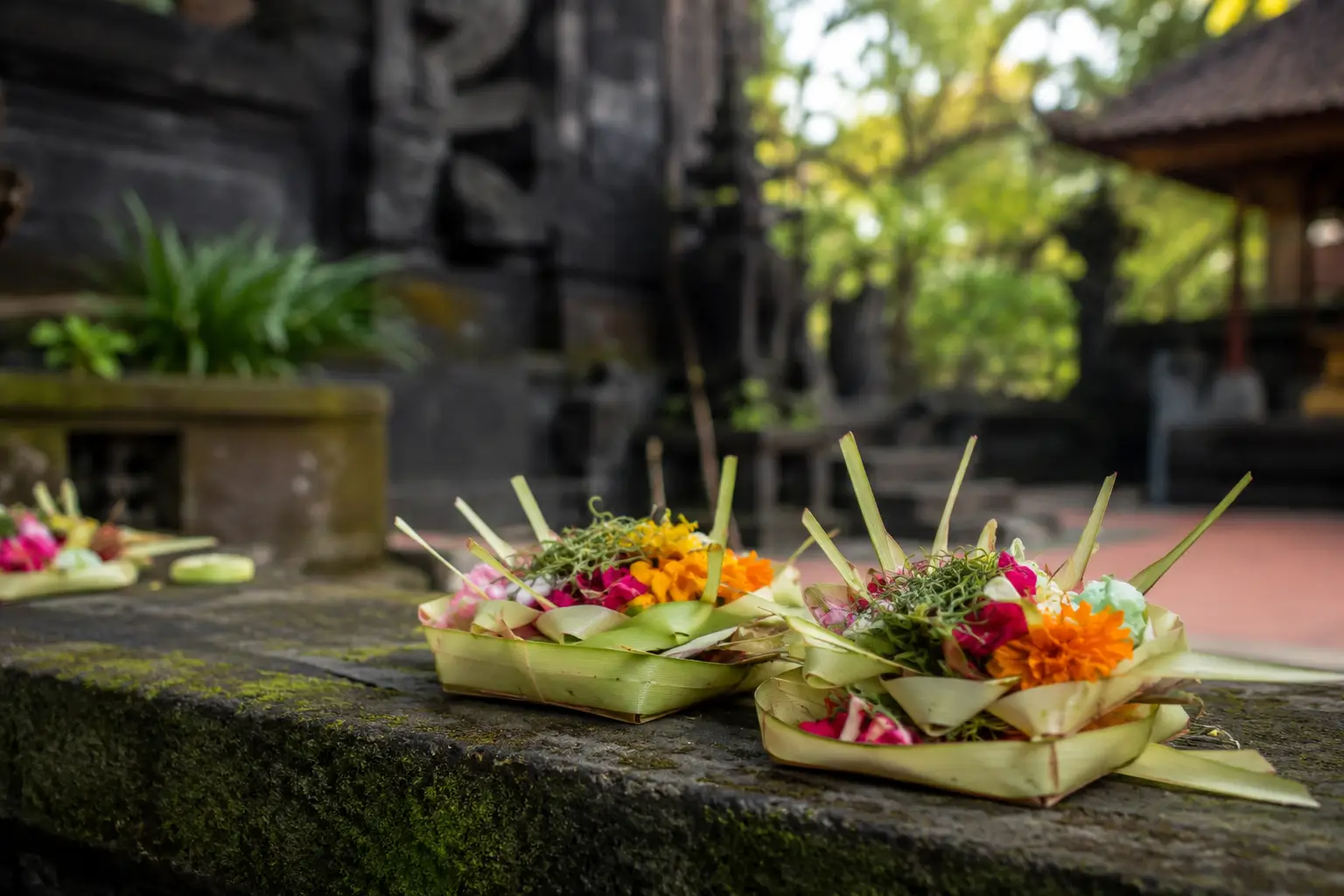
One of the most common offerings in Bali is called Canang Sari. Made from woven palm leaves and filled with flowers and other natural materials, these offerings are prepared and placed daily by many Balinese Hindu families.
While the appearance may vary, the purpose remains the same. Offerings are part of a daily tradition that has been passed down through generations and continues to play an important role in everyday life across the island.
For many visitors, they become one of the first visible signs that Bali’s culture is deeply connected to daily rituals and community values.
More Than Flowers and Leaves
At first glance, a Canang Sari may seem like a simple arrangement of natural materials. But behind each offering is a daily act of gratitude and mindfulness.
The process of creating and placing offerings encourages people to pause, reflect, and appreciate the blessings in their lives.
In a world that often feels busy and fast moving, there is something powerful about taking a few moments each day to practice gratitude.
This is one of the reasons many families find the tradition so meaningful, even if they come from different cultural backgrounds.
What Children Notice First
Children are naturally observant. They often notice details that adults overlook.
When they see offerings around Bali, they may be drawn to:
- the bright colors of the flowers
- the scent of incense
- the woven baskets made from natural materials
- the care and attention that goes into arranging them
- the fact that new offerings appear every day
These observations often lead to questions, conversations, and learning opportunities. For many children, these daily offerings become a mystery they want to solve. Their curiosity opens the door to discussions about culture, community, and the traditions that shape everyday life in Bali.
Instead of simply walking past, children begin to notice how traditions are woven into everyday life and develop a greater appreciation for the world around them.
Lessons Children Can Learn from Offerings
One of the beautiful things about cultural traditions is that they often teach universal values.
- Gratitude
Offerings remind us to appreciate the things we often take for granted. Teaching gratitude helps children develop a positive outlook and greater awareness of the people around them. - Patience and Care
Creating an offering takes time and attention. It is not rushed. Children can learn that meaningful things are often created through patience and care. - Respect for Others
Every culture has traditions that are important to the people who practice them. Learning about these traditions helps children develop empathy, respect, and understanding. - Connection with Nature
Flowers, leaves, and natural materials are an important part of Balinese offerings. They remind us of the relationship between people and the natural world that surrounds them.
Learning Through Everyday Experiences
Some of the most memorable learning opportunities do not happen in a classroom.
They happen while walking down a street, visiting a local market, watching a ceremony, or noticing something new in the environment.
For young children especially, real world experiences often leave a lasting impression because they connect learning with observation, conversation, and curiosity.
Living in or visiting Bali offers countless opportunities for this type of learning. Daily offerings are just one example of how culture can become part of a child’s understanding of the world.
How Curiosity Helps Children Understand Culture
Children learn best when they are encouraged to ask questions and explore the world around them. Cultural traditions provide valuable opportunities for these conversations.
At Parklife Bali, families from many different backgrounds come together to play, learn, and experience life in Bali. Everyday observations, including local traditions such as daily offerings, often spark meaningful conversations that encourage children to ask questions, explore new ideas, and develop a deeper appreciation for the culture around them.
These moments of curiosity may seem small, but they often become the experiences children remember most.
Seeing Bali Through a Child’s Eyes
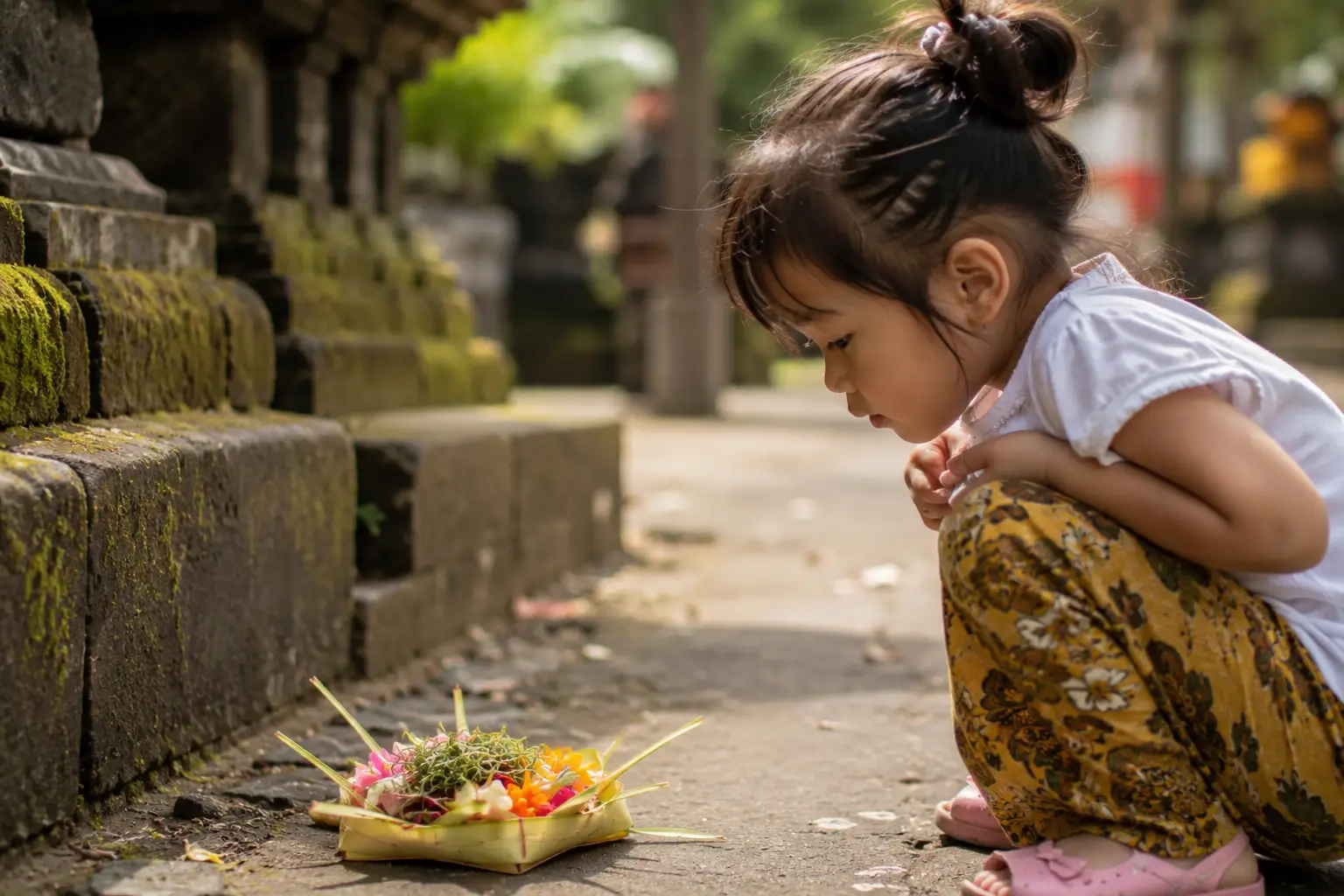
Adults often walk past daily offerings without giving them much thought. Children, however, tend to stop, look closely, and ask questions.
The next time you notice an offering in Bali, take a moment to see it through a child’s eyes.
What might seem ordinary at first can become the start of a meaningful conversation about culture, gratitude, respect, and community.
That curiosity is something worth encouraging.
Because sometimes the most meaningful lessons do not come from a classroom, a worksheet, or a planned activity. Sometimes they come from noticing a small basket of flowers placed carefully on the ground and wondering why it is there.
And in that moment, a simple daily ritual becomes an opportunity to learn about culture, gratitude, respect, and the world around us.